Max Richter, world premiere – with Gautier Capuçon, the Orchestre de Paris

Full
- Place
- Auditorium
- Hours
- 8.30 p.m.
Tuesday 27 April and Wednesday 28 April 2027
In 2023, during his historic musical creation for the Rothko exhibition at the Fondation, Max Richter met the cellist Gautier Capuçon. From this inspiring encounter came the idea of composing a cello concerto for him.
Co-commissioned with several international musical institutions, the Fondation presents the work's world premiere across two performances with the Orchestre de Paris conducted by Andrés Orozco-Estrada.
The concert opens with Bartók's Divertimento, in which the spirit of the concerto grosso comes alive through contact with popular Hungarian rhythms. This is followed by the world premiere of the cello concerto. This new score is part of an ambition for international reach that will continue over several seasons across Europe and the United States, notably with the co-commissioning orchestras of Rotterdam, Munich, Vienna, London and San Francisco.
The cello concerto marks the third instalment in the Fondation's ongoing relationship with Max Richter, following the Rothko exhibition in 2023 and the Sleep all-night concerts in November 2025.
The world premiere of this new work by Max Richter is a co-commission from the Fondation Louis Vuitton and the Orchestre de Paris-Philharmonie.
Programme détaillé :
- BÉLA BARTÓK
Divertimento for String Orchestra - MAX RICHTER
Cello Concerto
World premiere; co-commissioned by the Fondation Louis Vuitton


Max Richter
Max Richter is an Oscar-nominated composer and one of the most influential and acclaimed musical voices of his generation. Renowned for redefining contemporary classical music through the seamless fusion of traditional orchestration and modern electronic elements, Richter’s work spans solo albums, ballet, fi m, fashion and installation. His singular ability to translate profound human experience into sound has earned him a vast global following, with his catalogue now surpassing three billion streams worldwide.
Beyond his solo work, Richter is a prolific and sought-after collaborator. His recent score for Hamnet, directed by Chloé Zhao, has received widespread critical acclaim, earning nominations at the Critics Choice Awards, Golden Globe Awards, BAFTA Awards and the Academy Awards, underscoring his position as one of contemporary cinema’s most distinctive musical voices.
His creative partnerships span disciplines and generations: from scoring Dior runway shows for Kim Jones, to landmark ballets with Wayne McGregor, and fi lm collaborations with directors including Denis Villeneuve, Martin Scorsese and Ari Folman. Whatever the medium, Richter’s work is defi ned by emotional clarity, conceptual ambition and a deep humanism.
Central to this evolving body of work is Studio Richter Mahr, co-founded by Richter and his creative partner, visual artist Yulia Mahr. Located in rural Oxfordshire within a restored farmhouse set among 31 acres of woodland, the solar- and heat-pump-powered studio operates as a sustainable, multidisciplinary retreat - conceived as both instrument and environment, and refl ecting Richter’s belief that music-making can shape not only culture but the world around it. Through its residency programme, the studio offers artists free access and uninterrupted time in this serene setting, fostering focused experimentation and meaningful creative development.
Across more than two decades of work, from politically charged projects to intimate solo recordings, from overnight concerts to Oscar-nominated fi lm scores, Max Richter continues to expand the language of contemporary composition, creating immersive worlds in which listeners can reflect, dream and reconnect.
In recognition of his contribution to music, Richter was appointed Commander of the Order of the British Empire (CBE) in the King’s New Year Honours, reflecting both his cultural impact in the UK and his international standing as a leading figure in contemporary composition. In 2026, he was also presented with the Berlinale Camera at the Berlin International Film Festival, acknowledging his outstanding contributions at the intersection of music, cinema and cultural reflection.

Gautier Capuçon
Gautier Capuçon is one today’s foremost ambassadors – as both musician and mentor – for the cello. Every season, he performs with the world’s most renowned conductors and instrumentalists. In January 2022, furthering his commitment to teaching and mentoring young artists, he established his own foundation to provide up-and-coming musicians with a springboard for their professional pursuits. To date, the Fondation Gautier Capuçon has supported 36 budding cellists. Mr Capuçon is acclaimed worldwide for his remarkably expressive musicality, great virtuosity and the deep sonority of his 1701 Matteo Goffriller cello, “L’Ambassadeur”.
During the Covid pandemic, following the end of the first lockdown in the summer of 2020, Mr Capuçon set off on a special tour, Un été en France (A Summer in France) – a musical journey that allowed families across the country to attend live concerts. He arranged another such tour the following year, this time inviting young instrumentalists and dancers to join him on stage. Following such success, the initiative has continued and, to date, has drawn over 145,000 spectators to 80 concerts held in 66 towns and villages in France, giving 69 emerging artists the chance to share the stage and spotlight at his side. The tour has been the subject of five documentaries, the most recent of which aired between Christmas and New Year’s Eve 2025.
Highlights of his orchestral collaborations in recent seasons include concerts with the Vienna Philharmonic conducted by Christian Thielemann, Andris Nelsons and the Gewandhausorchester Leipzig, the Philadelphia Orchestra led by Stéphane Denève, the Hong Kong Philharmonic and Christoph Koncz, as well as tours with the Filarmonica della Scala conducted by Riccardo Chailly, the Frankfurt Radio Symphony (hr-Sinfonieorchester) under Alain Altinoglu and the Rotterdam Philharmonic with conductor Lahav Shani.
He recently toured across Europe and performed at Carnegie Hall with Evgeny Kissin, as well as with Rudolf Buchbinder, Renaud Capuçon and Nikolaj Szeps-Znaider. Each year, in his capacity as a chamber musician, he is invited to perform with partners such as Martha Argerich, Daniel Barenboim, Lisa Batiashvili, Frank Braley, Renaud Capuçon, Jérôme Ducros, Katia and Marielle Labèque, Menahem Pressler, Jean-Yves Thibaudet and Yuja Wang, as well as with celebrated quartets, including the Quatuors Artemis, Ébène, Hagen and Modigliani.
Gautier Capuçon also founded the Capucelli ensemble alongside six young cellists, graduates of his “Classe d’Excellence de Violoncelle”, an audition-based mentoring programme. Capucelli has performed across Europe and in Taiwan.
The 2025/26 season took Mr Capuçon on tour with the Berliner Philharmoniker and conductor Kirill Petrenko. He also enjoyed a residency with the Sächsische Staatskapelle Dresden and performed with the hr-Sinfonieorchester Frankfurt for the openings of the Dvořák Prague Festival and the George Enescu Festival in Bucharest. Further, he performed with the Orchestre de Paris under Andrés Orozco-Estrada, the San Francisco Symphony led by Simone Young and the Tonhalle-Orchester Zürich conducted by Paavo Järvi.
Over the course of his career, Mr Capuçon has forged many deep and lasting musical friendships. He is invited each season to play with the greatest orchestras, including the Philharmonic Orchestras of Berlin, Vienna, Los Angeles and New York, as well as the Chicago, San Francisco and London Symphony Orchestras. He works with conductors such as Lionel Bringuier, Myung-Whun Chung, Gustavo Dudamel, Charles Dutoit, Christoph Eschenbach, Paavo Järvi, Andris Nelsons, Yannick Nézet-Séguin, Andrés Orozco-Estrada and Tugan Sokhiev.
Memorable moments in chamber music include Mr Capuçon’s concerts with pianist Jean-Yves Thibaudet and violinist Lisa Batiashvili, as well as a performance tour with pianist Nikolai Lugansky.
He also collaborates with many contemporary composers, including Lera Auerbach, Karol Beffa, Esteban Benzecry, Nicola Campogrande, Qigang Chen, Bryce Dessner, Richard Dubugnon, Henri Dutilleux, Jérôme Ducros, Danny Elfman, Thierry Escaich, Joe Hisaishi, Philippe Manoury, Bruno Mantovani, Andrew Norman, Krzysztof Penderecki, Max Richter, Wolfgang Rihm and Jörg Widmann.
Recording exclusively for Erato (Warner Music), Mr Capuçon has won many awards for his extensive and varied discography. Following his album Intuition, his 2020 release, Émotions, featuring works by composers such as Debussy, Schubert and Elgar, topped the sales charts for over 30 weeks, with more than 100,000 copies sold worldwide, and was certified gold in France. In 2022, his subsequent album, entitled Sensations, became the first classical recording to reach number one on the all-genre charts in France. It was followed by Destination Paris in 2023, focused on works dedicated to France’s capital. After his album Elgar & Walton: Cello Concertos, recorded with Antonio Pappano and the London Symphony Orchestra and released in autumn 2024, Mr Capuçon created an album inspired by world premieres, Gaïa, in November 2025. Bringing together works by leading-edge musical minds such as Max Richter, Bryce Dessner, Ludovico Einaudi, Gabriela Montero, Joe Hisaishi and Nico Muhly, the album was presented in concert with the San Francisco Symphony in November 2025.
His previous recordings include the Shostakovich concertos with Valery Gergiev and the Mariinsky Orchestra, works by Saint-Saëns with the Orchestre Philharmonique de Radio France led by Lionel Bringuier, the complete Beethoven sonatas with pianist Frank Braley, Schubert’s String Quintet in C Major with the Quatuor Ébène, Intuition with the Orchestre de Chambre de Paris under Douglas Boyd, as well as live recordings with Martha Argerich, Renaud Capuçon and the Chamber Orchestra of Europe under Bernard Haitink. He also recorded Beethoven’s piano trios with Renaud Capuçon and Frank Braley, sonatas composed by Franck and Chopin with Yuja Wang, as well as a solo album, Souvenirs, with works by Bach, Dutilleux and Kodály alongside a greatest-hits collection, forming a three-disc set released especially for his 40th birthday. Mr Capuçon’s most recent album, Gaïa, features sixteen works – inspired by nature and the Earth – written for him by composers from a broad cultural spectrum.
Gautier Capuçon also appears on a number of live DVDs, such as his performance of Haydn’s Cello Concerto No. 1 with the Berlin Philharmonic under Gustavo Dudamel, and that of Brahms’s Double Concerto with Lisa Batiashvili and the Staatskapelle Dresden conducted by Christian Thielemann.
In addition to his myriad performance commitments, the cellist is an ambassador for the “Orchestre à l’École” non-profit organisation, bringing music to young people in school settings through learning programmes lasting three to four years. Today, there are 1,630 school orchestras composed of some 44,000 children spread across the near-entirety of France. Since its founding, more than 184,000 students have benefitted from this initiative.
In January 2021, Mr Capuçon was promoted to the rank of Chevalier in France’s Ordre National de la Légion d’Honneur.
From 2019 through 2025, he hosted Les Carnets de Gautier Capuçon, a popular programme broadcast weekdays from 5 to 6 p.m. on France’s Radio Classique. An established celebrity in his home country, he frequently makes television appearances and has served as a judge on the France 2 television show Prodiges since the programme’s inception in 2014, a broadcast that annually draws more than three million viewers over the year-end holiday season.
Born in Chambéry, France, in 1981, Gautier Capuçon began playing the cello at the age of five with Augustin Lefèbvre and studied in Paris with Annie Cochet-Zakine, Philippe Muller, then in Vienna with Heinrich Schiff. He has been awarded several first prizes in international competitions, including the Premier Grand Prix at the Concours International André Navarra in Toulouse.
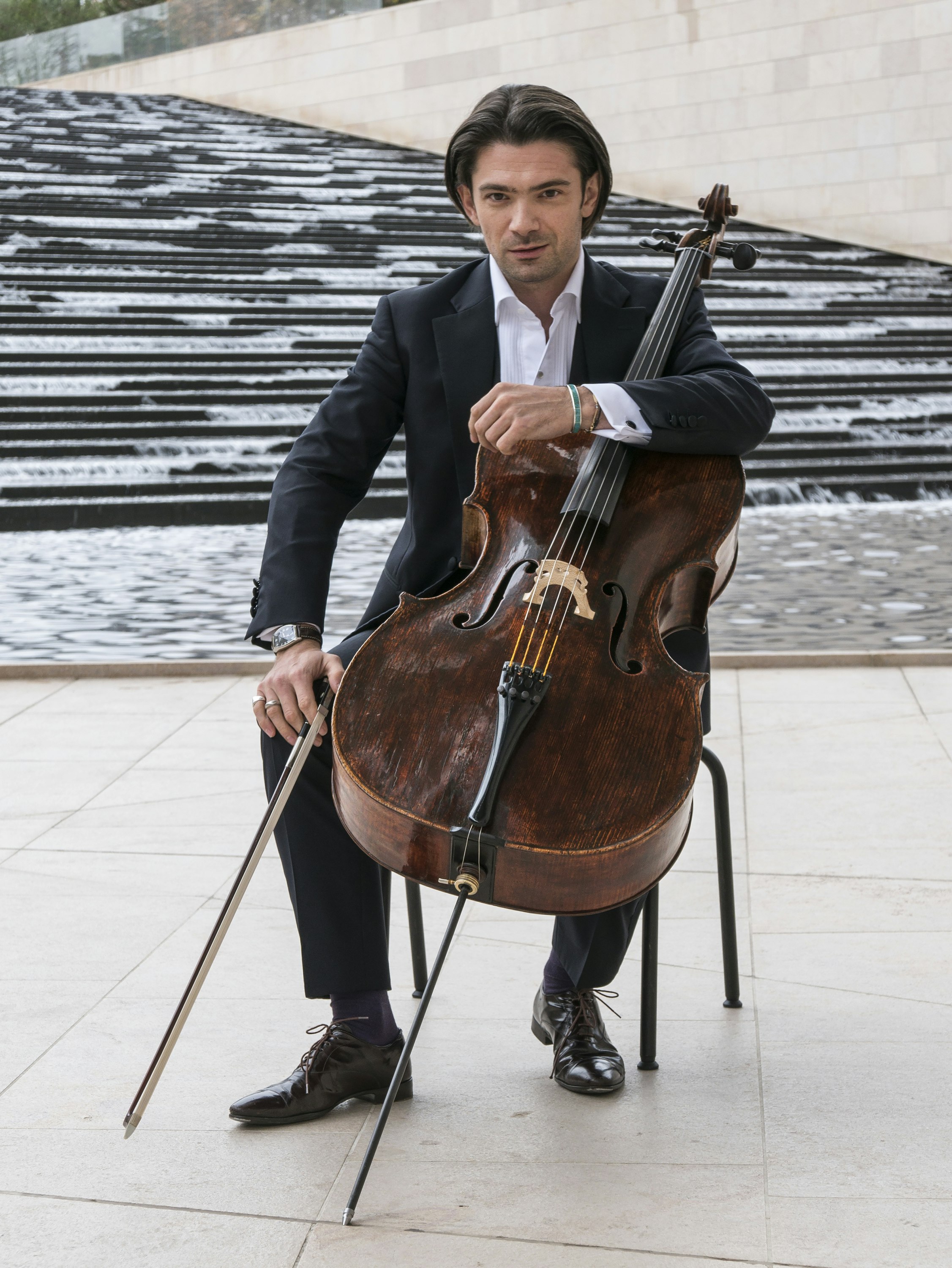
Andrés Orozco-Estrada
Le chef d’orchestre colombien Andrés Orozco-Estrada prendra ses nouvelles fonctions de directeur musical de l’Orchestre symphonique de la radio suédoise à partir de la saison 2026-27. Depuis l’automne 2025, il occupe le poste de directeur musical de l’Orchestre du Gürzenich et de l’Opéra de Cologne.
C’est avec la tradition romantique constitutive de l’histoire de l’orchestre (Brahms, Mahler, Richard Strauss) qu’il inaugure son mandat à la tête de ce dernier. À l’Opéra de Cologne, il dirigera, des représentations de Manon Lescaut et des Noces de Figaro, entre autres. Dans le même temps, il poursuit son travail avec la Kronberg Academy et son engagement à soutenir les jeunes musiciens talentueux à travers un concours international de composition.
Également chef principal de l’Orchestre symphonique de la RAI de Turin, il réalise une tournée en Espagne aux côtés de cet orchestre en novembre 2025. Il a récemment été invité par les festivals de Tanglewood et de Lucerne. Le festival de Rheingau l’a accueilli en tant qu’artiste en résidence.
Durant cette saison 2025-26, il se produit notamment avec le Tonhalle-Orchester Zurich, le Royal Concertgebouw Orchestra, le San Fransisco Symphony ou le Los Angeles Philharmonic. Il a dirigé le concert du Nouvel An de la Staatskappelle de Dresde, diffusé en direct à la télévision allemande.
Né à Medellín (Colombia), Andrés Orozco-Estrada a commencé l’étude du violon dans sa ville natale avant de s’orienter vers la direction d’orchestre à l’adolescence. En 1997, il intègre l’Académie de musique et des arts du spectacle de Vienne, où il enseigne la direction d’orchestre depuis 2022.

Orchestre de Paris
Première formation symphonique française avec ses 119 musiciens, l’Orchestre de Paris est mené depuis septembre 2021 par Klaus Mäkelä, son dixième directeur musical. Il se distingue par une large palette de projets aussi variés qu’ambitieux, multipliant les initiatives pédagogiques comme les propositions artistiques novatrices.
Après une saison 2025-26 ponctuée par la première mondiale de l’opératorio Antigone de Pascal Dusapin, la sortie en salle du film Nous l’Orchestre de Philippe Béziat (195 000 spectateurs), capté au plus près des musiciens, et des prestations mémorables au Festival d’Aix-en-Provence (La Femme sans ombre de Strauss, dans une nouvelle mise en scène de Barrie Kosky, et Le Château de Barbe-Bleue de Bartók), l’Orchestre de Paris et son chef partageront en 2027-28 une dernière saison côte à côte, avec au programme plusieurs chefs-d’œuvre du répertoire symphonique (de Berlioz à Britten en passant par Mahler), Portrait d’orchestre, un projet original imaginé par Aurélien Bory autour de la Troisième Symphonie de Beethoven, et une série de concerts en guise d’adieux à Klaus Mäkelä.
Leur collaboration a donné lieu à trois albums chez Decca. L’orchestre a élu résidence à la Philharmonie dès son ouverture en 2015 ; il participe aujourd’hui à nombre des dispositifs phares de l’établissement, dont Démos (Dispositif d’éducation musicale et orchestrale à vocation sociale) et La Maestra, concours international qui vise à favoriser la parité dans la direction d’orchestre. L’élargissement des publics est au cœur de ses priorités : que ce soit dans les différents espaces de la Philharmonie ou hors les murs, à Paris ou en banlieue, l’orchestre offre une large palette d’activités destinées aux familles, aux scolaires, aux jeunes – avec des concerts spécifiquement dédiés aux moins de 28 ans – ou aux citoyens éloignés de la musique. Sur le plan pédagogique, l’orchestre a mis en place une Académie internationale destinée à de jeunes instrumentistes en fin d’études.
Fondé en 1967, héritier d’une longue histoire qui remonte au début du xixe siècle, l’Orchestre a vu se succéder à sa direction Charles Munch, Herbert von Karajan, sir Georg Solti, Daniel Barenboim, Semyon Bychkov, Christoph von Dohnányi, Christoph Eschenbach, Paavo Järvi et Daniel Harding. À partir de la saison 2027-28, Esa-Pekka Salonen en sera le chef principal et Roberto González-Monjas le premier chef invité. Sarah Nemtanu a rejoint l’Orchestre à titre permanent en tant que violon solo le 1er janvier 2026.

Full